
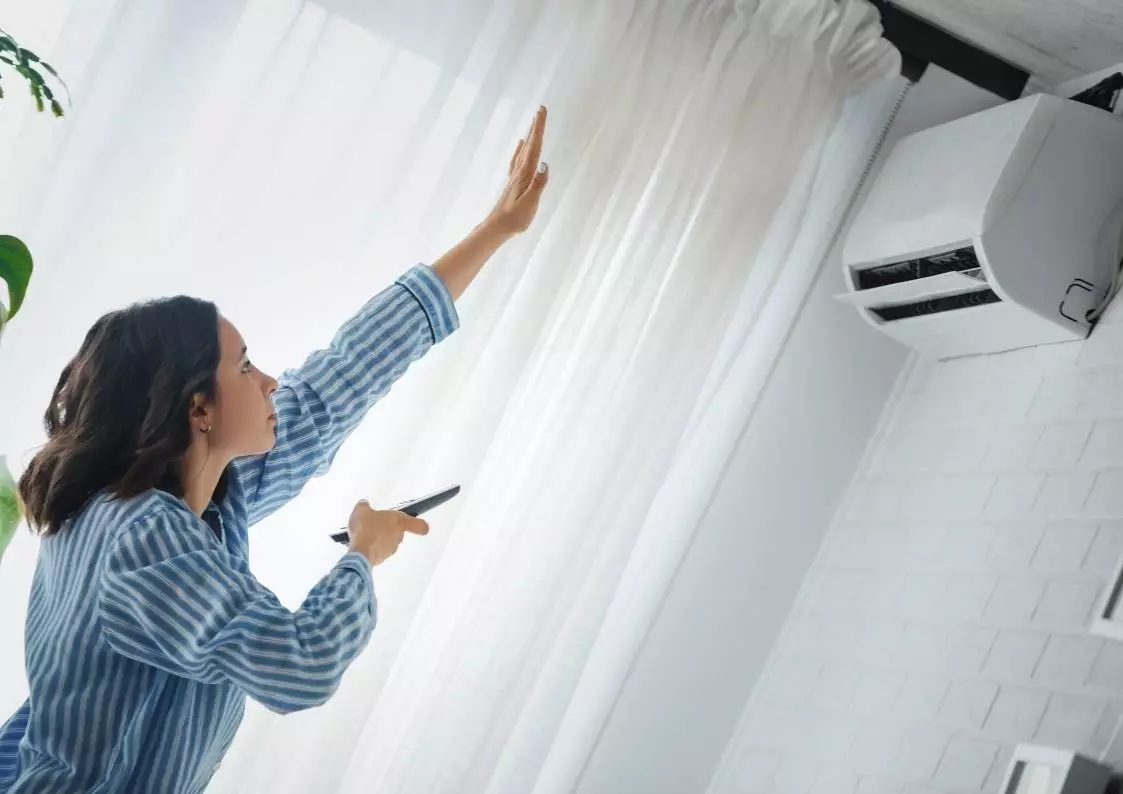
Will Your Air Conditioner Cope This Summer?
If your air conditioner struggled last February, it will struggle again this February. Air conditioners don’t recover over winter. So the useful question to ask now, before the first run of hot days, isn’t whether the unit still switches on. It’s whether it can hold the whole house at a liveable temperature on the days that actually matter. And what your options are if the answer is no.
Key takeaways
- Judge your system on how it handled last February, not on how it feels in September.
- A ducted reverse-cycle system typically lasts 15 to 20 years.
- Swapping a gas heater for electric reverse cycle gives you one system for both seasons, and puts a Victorian Energy Upgrades rebate in play.
- If you want it sorted before summer, spring is when to start, not January.

Six Signs Your System Won’t Get Through Another Summer
Most air conditioners don’t stop dead. They get quietly worse, one summer at a time, until a run of hot days makes it obvious.
1. It Runs All Day and the House Still Isn’t Cool
A unit that never reaches the set temperature on a hot day is usually undersized for the house it’s in, or has lost capacity with age. Homes change: a room gets added, a wall comes out, the roof cavity gets insulated, the family grows. The unit that suited the house in 2010 may simply be too small for it now.
2. Some Rooms Never Get There
West-facing bedrooms and rooms at the far end of a duct run are the usual culprits. That’s a design problem, not a weather problem. It points to duct layout, outlet sizing or a lack of zoning rather than the unit itself. Fix it properly when the system is replaced. Otherwise you live with it for another decade.
3. Your Summer Bills Climb Every Year
Compare a couple of summers of bills side by side. If the house is being used the same way and the cost keeps rising, the unit is working harder for the same result. Older units also lose efficiency as components age.
4. The System Is Fifteen Years Old or More
A ducted reverse-cycle system typically lasts 15 to 20 years. Past that, you’re gambling on a summer. A replacement organised in spring is a very different experience to one organised mid-heatwave. If you don’t know the age, check the plate on the outdoor unit or the paperwork from the install.
5. You’re Heating With Gas and Cooling With Something Else
If you heat with gas ducted and cool with something separate, you’re running two lots of equipment, two lots of running cost, and two things that age on their own timetable. A ducted reverse-cycle system does both jobs through one set of ducts. Taking the gas heater out is also the step that makes a Victorian Energy Upgrades rebate possible.
6. Your Evaporative System Fades on Humid Days
Evaporative cooling works by evaporating water into the airstream, so its effect drops away as humidity rises. On a dry northerly it’s excellent. On a sticky, humid day it isn’t. If you’ve spent the past few summers opening windows and hoping, that’s the technology doing what it does, not a fault.
What Does Replacing a System Actually Involve?
A changeover is a planned job: a site visit, a design, an install date. Four things are worth understanding before you start collecting quotes.
Sizing It to Your House, Not to the Old Unit
The capacity should come from your house: floor area, ceiling height, insulation, glazing, orientation and how many rooms need to run at once. Matching the new unit to whatever was there before repeats any mistake already built in. Ask any installer how they arrived at the kilowatt figure they’ve quoted. If the answer is “same as the old one”, keep looking.
Ductwork and Grilles
Our ducted changeovers cover new ductwork and grilles as well as the unit itself. Old ducting sags and leaks at the joins, losing cooled air into the roof space. Put a new system onto tired ducts and you undo a good part of what you’ve paid for. Check that ductwork and grilles are named in writing on any quote you’re comparing.
Filtration and Air Quality
Filtration is built in. Higher-grade options including HEPA are available on some models. If anyone in the house reacts to dust or pollen, raise it at quote stage. The choice of unit and filter is made then, not afterwards. Ask what filtration the system you’re quoted on uses.
The Victorian Energy Upgrades Rebate
Victorian Energy Upgrades is a Victorian Government program that supports households moving off gas. The trigger is removing a gas appliance, so a home swapping gas ducted heating for an electric reverse-cycle system is the case it’s designed for. What a particular property qualifies for depends on the property and the system, so ask about it when you’re getting quotes rather than assuming a figure.
Getting More Out of the System You Have
If a replacement isn’t happening this year, a few habits make a real difference to how the current unit copes and what it costs to run.
Stop the Cool Air Escaping
Seal the gaps around doors, windows and unused vents. Draught seals and a tube of caulk will do it. They stop the unit fighting a leak it can’t win. Keep blinds and curtains closed on the sunny side of the house, especially west-facing windows. Shut the doors to rooms nobody’s using.
Use the Settings the System Already Has
Running an air conditioner flat out isn’t the cheapest way to cool a house. Sleep mode eases the temperature overnight. Eco mode trims power draw through the day. Timers take the edge off the house before you wake up or before you get home. That’s easier work than dropping the temperature from scratch at 6pm.
Dry Mode on Sticky Days
On humid days the air feels worse than the thermostat suggests. Dry mode pulls moisture out of the air rather than chasing a lower temperature, which cuts condensation and helps keep mould from taking hold, effectively dehumidifying your home. If yours has Wi-Fi control, use it to switch things off when the house is empty. If you have panels on the roof, the sums change again: see running a reverse-cycle system on solar.
Questions Melbourne Homeowners Ask
When Should I Organise a Replacement?
Spring, if you can. Deciding before the heat arrives means you choose an install date instead of taking whatever’s left. The system is then running before you need it, not during the week you need it most.
Can I Keep My Gas Heater and Just Replace the Cooling?
You can, but you’d be paying to keep two systems doing one job, and each of them ages on its own timetable. One reverse-cycle system covers both seasons from a single set of ducts. The gas heater coming out is also what puts a Victorian Energy Upgrades rebate in play.
Does a New System Help With Dust and Pollen?
Filtration is part of the unit, so it comes down to which one goes in. HEPA-grade options exist on some models and not on others. Raise it while you’re comparing quotes, because that’s when the choice gets made.
How Long Does a Ducted System Last?
Typically 15 to 20 years. If yours is in that range and struggled last summer, it’s worth getting a replacement quote now rather than finding out in February.
Talk to Beyond Heating and Cooling
We design and install ducted reverse-cycle heating and cooling, split systems and evaporative cooling across Melbourne, including the northern and outer-northern suburbs, and we hold VBA and ARC licences. If last summer was hard work, get a quote booked while there’s still room in the calendar.


Our Services
Get In Touch
Contact us today for a free, no-obligation quote on your heating and cooling needs.